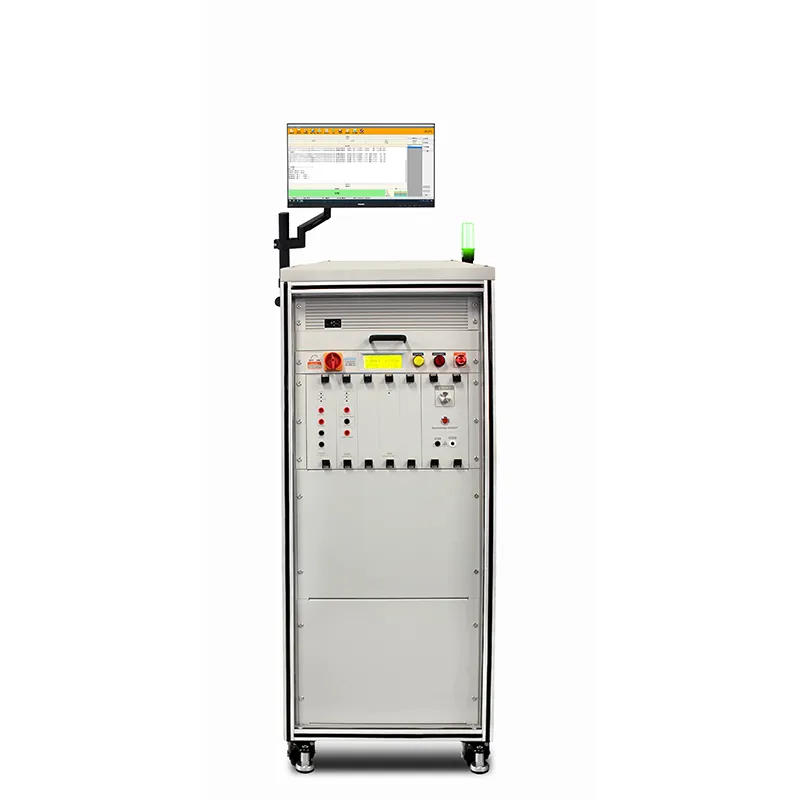
Investing in harness testers is critical for manufacturers aiming to enhance efficiency and minimize defects. This ROI analysis helps you understand why spending on these testers not only streamlines production but also significantly boosts profit margins. In today's competitive market, both reliability and cost-effectiveness are crucial, making harness testers essential tools in reducing operational inefficiencies and improving product quality.
A harness tester is a specialized machine used to test the functionality and quality of wire harnesses. These devices can identify issues such as shorts, opens, and misassemblies. By ensuring high-quality production, harness testers help prevent defects that could lead to costly recalls or repairs.
Investing in harness testers can lead to significant advantages, including:
To understand the tangible benefits of investing in harness testers, a cost-benefit analysis is essential. This includes examining initial costs, ongoing operational costs, and the long-term savings these testers can achieve.
The upfront investment for harness testers varies depending on their features and capabilities. Basic models can start from $5,000, while advanced options may exceed $20,000. An exploratory assessment of your production needs will aid in budgeting.
Operating costs involve maintenance, labor, and consumables. However, with a harness tester, the labor costs can be reduced as automation enhances productivity.
Investing in harness testers increases efficiency, reducing the frequency of defects. A 30% reduction in returns can lead to substantial savings, equating to thousands of dollars per year.
The Return on Investment (ROI) can be calculated using the formula:
ROI (%) = (Net Profit / Cost of Investment) x 100
Utilizing harness testers can lead to a significant net profit when comparing reduced defects and related costs. Assume an initial investment of $15,000 with savings of $5,000 annually:
ROI = (5,000 / 15,000) x 100 = 33.33%
Case studies show that an automotive parts manufacturer, after implementing a harness tester, reduced defects by 40%, saving approximately $30,000 yearly. This demonstrates a clear ROI and supports the case for investing in testing equipment.
Investing in harness testers is not merely an expense but an essential move towards ensuring quality and efficiency. The benefits far outweigh initial costs, and the potential for savings through reduced defects and improved production efficiency speaks for itself. For manufacturers looking to remain competitive and profitable, harness testers are a worthwhile investment.